
If you’ve got $150 from 1960, inflation has really changed what that money can do now. Looking at current prices gives a better sense of how the cost of things has shifted over the decades.
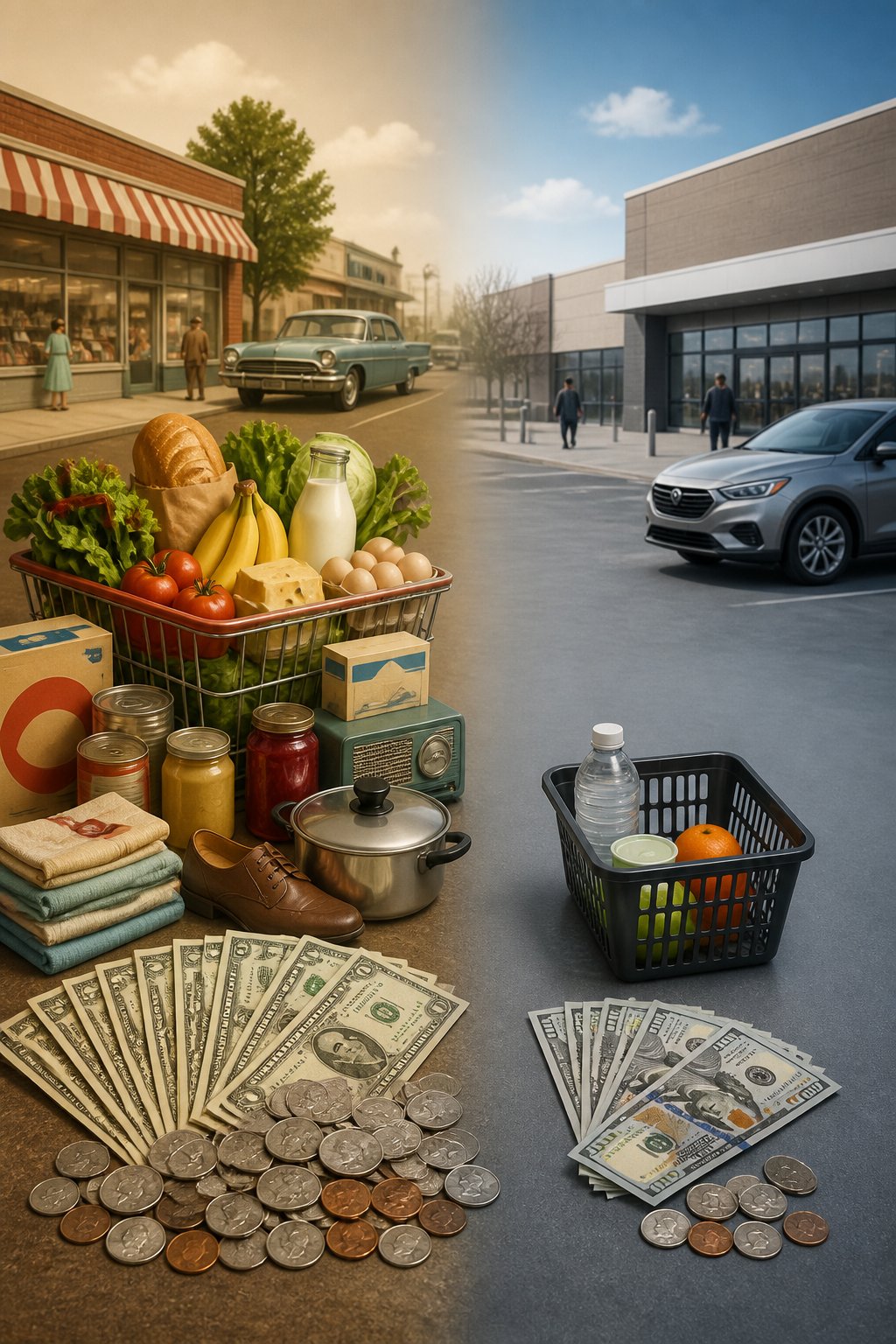
$150 in 1960 had about the same purchasing power as $1,692.32 in 2026. That estimate comes from changes in the U.S. Consumer Price Index, letting you see just how far the dollar has slipped in 66 years.
Check the inflation-adjusted value of $150 to dig into the numbers and see some of the long-term trends.
Key Takeaways
- $150 in 1960 is roughly $1,692.32 in 2026 dollars.
- The adjustment looks at average consumer prices.
- Historical values won’t match the price of every single item.
Today’s Equivalent Purchasing Power

Using 2026 CPI estimates, $150 in 1960 comes to about $1,653 to $1,692 in 2026, depending on the calculator. Inflation has pushed prices up by about eleven times, so a dollar doesn’t stretch nearly as far.
Estimated 2026 Value
The $1,653 estimate uses CPI numbers of about 29.4 for 1960 and 324.054 for 2026. You can check out that 2026 inflation estimate for $150.
Another calculation lands at $1,692.32. That one uses a different set of CPI data and shows a total price increase of about 1,028%. Here’s a 1960-to-2026 dollar conversion if you’re curious.
These numbers don’t always match because 2026 inflation data isn’t final yet, and calculators sometimes use different CPI updates. For practical planning, it’s fair to say $1,650 to $1,700 in today’s dollars is the ballpark for $150 from 1960.
What the Increase Means for Buying Power
If you had $150 in 1960, you could buy about what $1,692 buys in 2026 using the higher estimate. This doesn’t mean your money grew—just that you’d need that much today to buy a similar average basket of stuff.
Inflation since 1960 has chipped away at the dollar’s value. One 1960 dollar is now worth about $11.28 in 2026 dollars. Flip it around, and a 2026 dollar buys just a small fraction of what a 1960 dollar could.
This comparison uses average prices. Your actual experience might differ, since the cost of housing, medical care, food, transportation, and other things haven’t all changed at the same rate. Some items that cost $150 in 1960 might be way more or less than the 2026 estimate.
How the Inflation Adjustment Is Calculated
An inflation calculator checks how much buying power your amount had in two different years. It relies on Consumer Price Index data, though the 2026 number could still change as new data comes in.
Consumer Price Index Formula
Here’s the basic formula:
Adjusted amount = original amount × (CPI in 2026 ÷ CPI in 1960)
To figure out today’s value, enter $150, pick 1960 as your starting year, and 2026 as your end year. The calculator compares the average CPI for both.
The Consumer Price Index (CPI) tracks price changes for a wide range of goods and services. The Bureau of Labor Statistics keeps the official numbers most calculators use.
Prices went up by about 1,028% from 1960 to 2026. So, $150 from 1960 equals about $1,692.32 in 2026. This is based on average consumer prices, not specific things like cars or college tuition.
Why 2026 Estimates Can Differ
Results vary because calculators use different data updates and methods. Some use yearly averages, others use a specific month. A January-to-January comparison might not match an annual average.
The 2026 CPI isn’t final during the year, so some calculators use the latest monthly data or make a forecast for the rest of the year. Later updates can change the results.
For example, one estimate says $150 from 1960 is $1,692.32, another says about $1,653. That’s not a mistake—it’s just different sources and methods. Check if the calculator tells you which CPI period it uses and where it gets its data.
Inflation Trends From 1960 to 2026
From 1960 through 2026, prices rose a lot, shrinking the dollar’s purchasing power. The biggest jumps happened in the 1970s and early 1980s. Inflation cooled off for a while after that.
Cumulative Change and Average Annual Rate
Looking at the 1960–2026 inflation calculation for $150, you’d need about $1,692.32 in 2026 to match $150 in 1960. Prices shot up by about 1,028.22%, and the average yearly inflation rate was around 3.74%.
One 1960 dollar had buying power like about $11.28 in 2026. The actual amount you’d need now depends on what you’re buying, since inflation doesn’t hit every category the same.
The calculation uses the Consumer Price Index, which tracks changes in prices for a broad group of goods and services. It’s based on averages, not your household’s exact spending.
Notable Periods of Higher Inflation
Inflation spiked in the 1970s and early 1980s. Yearly inflation hit 11.04% in 1974, 11.35% in 1979, and 13.50% in 1980. Prices climbed fast, and the dollar’s value dropped more quickly than in later years.
After 1982, inflation mostly dropped. It stayed between about 1% and 4% per year from the mid-1980s through 2020, with a dip to 0.36% in 2009.
Inflation picked up again in the early 2020s. The rate was 4.70% in 2021, 8.00% in 2022, dropped to 4.12% in 2023, and then 2.89% in 2024. Here’s the year-by-year inflation table if you want to see all the details.
Understanding Inflation by Year
Inflation compounds, so each year’s price bump builds on the last. For example, $150 would be $417.57 in 1980, $872.64 in 2000, and $1,311.55 in 2020 when you adjust for buying power.
| Year | Equivalent value of $150 |
|---|---|
| 1960 | $150.00 |
| 1970 | $196.62 |
| 1980 | $417.57 |
| 1990 | $662.33 |
| 2000 | $872.64 |
| 2010 | $1,105.01 |
| 2020 | $1,311.55 |
| 2026 | $1,692.32 |
The yearly rate shows how much prices changed in a single year. The adjusted dollar amount shows the total effect since 1960. Even a low rate can add up to a big change over time.
Using Historical Dollar Values Responsibly
A dollar’s value shifts over time, so converting 1960 dollars to today’s dollars helps you compare spending in a way that makes sense. This works best as a general guide, not an exact price prediction for every product or household.
Comparing Past Prices With Today’s Costs
If you had $150 in 1960, you’d need about $1,692.32 in 2026 to have the same general buying power, according to the consumer price index calculation for $150. That means the dollar lost value: one 1960 dollar could buy about as much as $11.28 today.
Use this number for a broad spending power comparison. Maybe you’re wondering if an old wage, purchase, or household budget was worth more than the same amount today. If you can, check the actual price of the thing you’re comparing, since food, housing, health care, and tech haven’t all changed the same way.
When you talk about this, mention both amounts and the years. Saying “$150 in 1960 equals about $1,692 in 2026” is clearer than just saying prices went up.
Limits of CPI-Based Comparisons
The CPI tracks a changing mix of consumer goods and services. It gives a rough average, not the exact cost of what you buy.
Your own inflation rate might be higher or lower than the CPI. If most of your budget goes to housing, changes in rent or home prices matter more than, say, electronics. A retiree, a student, or a family with kids might see inflation differently.
CPI also doesn’t measure everything. It skips changes in product quality, availability, durability, taxes, interest rates, or investment returns. For a more precise comparison, start with the CPI-adjusted amount, then check historical prices and the specific spending category.
Frequently Asked Questions
Using the 2026 estimate, $150 from 1960 has about $1,692 in buying power today. That’s a total price increase of about 1,028%, with inflation averaging roughly 3.74% per year.
How much purchasing power would $150 from 1960 have today?
You’d need about $1,692 in 2026 to match the buying power of $150 in 1960. Some calculators say about $1,658—it depends on the CPI data and method used.
What is the inflation-adjusted value of $150 in 1960?
It’s about $1,692.32 in 2026 dollars. Prices went up by about 11.28 times between 1960 and 2026.
How is the value of 1960 dollars calculated in today’s money?
You compare the Consumer Price Index for 1960 with the latest CPI. Multiply $150 by the ratio of those two numbers.
What could $150 buy in 1960 compared with today?
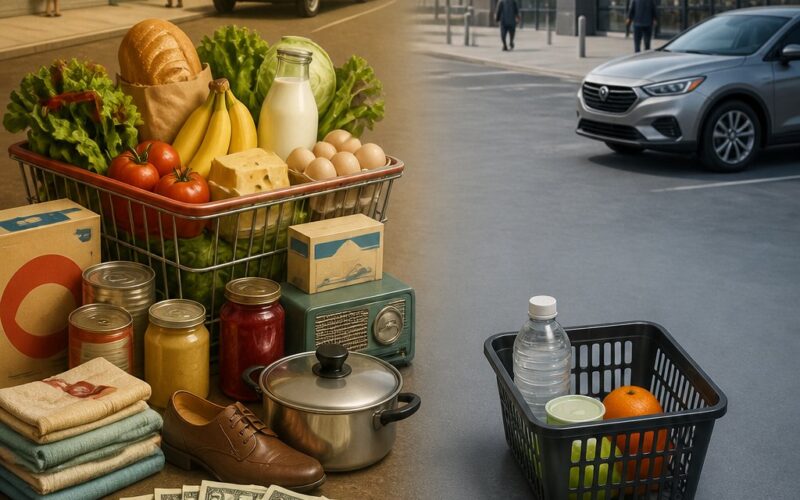
In 1960, $150 could take care of plenty of everyday expenses. People bought clothing, household goods, or even stocked up on groceries with that amount.
To buy about the same amount of stuff in 2026, you’d need roughly $1,692. That’s what this 1960-to-2026 inflation calculator suggests, at least.
How much has inflation increased prices since 1960?
Prices shot up by around 1,028.22% from 1960 to 2026. If something cost $1 in 1960, you’d pay about $11.28 for it now, based on the same inflation estimate.
What was the average inflation rate from 1960 to today?
From 1960 to 2026, the average annual inflation rate was about 3.74%.
Keep in mind, prices didn’t rise by that exact amount each year. Inflation shifted quite a bit during those decades.