

You can stretch $50 in different ways depending on where you go and what you want to do. In most everyday situations in the Dominican Republic, it goes farther than it would in the United States.
For casual meals, local transport, and simple activities, $50 can cover several days of basic spending or a single nice experience.
If you stay in tourist hotspots, eat at upscale restaurants, or book private tours, that $50 will run out fast. Stick to local markets, bus rides, and street food, and you’ll get much more value—maybe even save some for tips or souvenirs.
Key Takeaways
- $50 buys more everyday goods and meals in local areas than in tourist zones.
- Your choices—food, transport, and activities—decide how long $50 will last.
- Use local options and safe money-transfer methods to maximize value.
Understanding $50 USD in Dominican Pesos
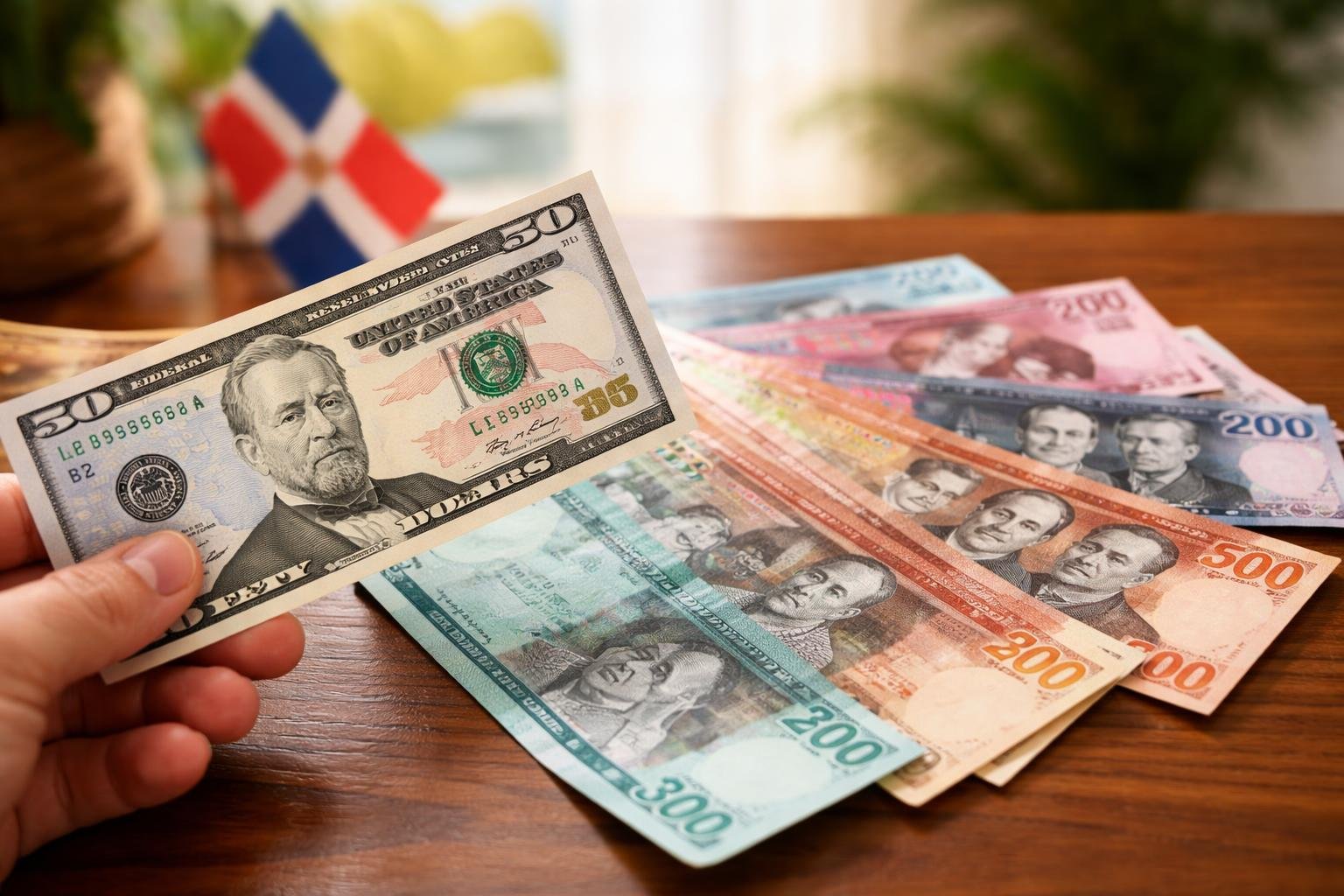
$50 USD comes out to about 59–60 Dominican pesos per dollar. That means fifty dollars usually converts to around RD$2,950–RD$3,000.
You’ll want to check live rates and fees because the amount you get can swing a bit depending on the provider and time of day.
Current USD to DOP Exchange Rate
The USD to DOP rate changes daily. Mid-market or “live” exchange rates from converters show the pure market price, and lately it’s been close to 59–60 DOP per 1 USD.
So, 50 USD at mid-market would be about RD$2,950–RD$3,000. Banks and cash exchangers tack on a margin, which means you get a little less.
A 1% to 3% margin could drop RD$2,950 to RD$2,870–RD$2,920. Rates also change by time zone and market hours, so morning and late-afternoon quotes might differ.
Use the mid-market figure for fair comparison. Check sites like XE for live rates and recent trends.
How to Convert USD to DOP Effectively
Decide if you need cash or a transfer. For small amounts like $50, withdrawing local cash at an ATM usually gives you a rate close to the bank’s, but you might pay ATM and foreign-transaction fees.
Paying by card can be handy, but watch for foreign transaction fees and those dynamic currency conversion prompts that pop up.
If you’re sending a remittance or making a bigger transfer, pick a money-transfer service with clear fees and competitive rates. Look for providers that show both the mid-market rate and the send/receive rate.
Compare the final DOP you’ll get, not just the headline rate. Always check the total cost: exchange margin, fixed fees, and any receiving bank charges.
Carry smaller USD bills in good condition; some places really prefer newer notes. When exchanging in person, ask for the rate first and count your cash before you leave.
Popular Currency Converters and Tools
You can use real-time converters and rate trackers to check USD to DOP quickly. XE is good for mid-market charts and stats on recent highs and lows.
Currency converter sites give you a fast mid-market view and a historical chart. Apps like Wise and Revolut show live or near-live rates and often offer better margins than banks for transfers and card spending.
Wise displays a clear mid-market rate and shows its fee before you send. Revolut offers in-app exchange and card spending with competitive rates.
Pick a currency calculator widget or app that shows both the mid-market rate and the actual send/receive rate. That way you catch any hidden margins.
When comparing, link a provider’s rate to the final amount in DOP so you know exactly how much RD$50 USD will buy.
Practical Value of $50 in the Dominican Republic

You can stretch $50 in different ways depending on where you spend it and whether you use cash or cards. Exchange rates, local prices, and whether you’re a tourist or a local all change what $50 will buy.
Typical Costs for Locals and Tourists
If you use the local currency, the US dollar converts to Dominican pesos at a variable rate. ATMs and banks usually give you close to the market rate, while currency exchange desks or hotels may add a markup.
Tourists often pay higher prices at beaches, resorts, and tourist shops. For day-to-day items, locals might spend about 100–300 DOP on a basic hot meal from a small eatery.
As a tourist, you might pay 300–800 DOP for a sit-down meal in a mid-range restaurant. A local bus ride (guagua) costs a few dozen DOP, while taxis and ride apps cost more.
Use a live converter like Exchange-Rates.org to check the current USD to DOP rate before you spend.
Purchasing Power Compared to Other Countries
Your $50 goes further in the Dominican Republic than in high-cost places like the US or most European cities. Compared to nearby Caribbean or Latin American countries, it depends on local wages and inflation.
If the peso weakens against the dollar, $50 buys more pesos and goods. Watch an exchange-rate chart—Wise has interactive ones—to see recent trends and decide when to convert cash.
Local salaries and prices matter too: services and imported goods cost more relative to local incomes than basic domestic items.
Daily Expenses and What $50 Can Buy
With $50, you can cover several common expenses in one trip. Some examples in pesos: one week of basic groceries for one person, or three to five mid-range restaurant meals, or several taxi rides and a few entrance fees to tourist sites.
A 1–2 night stay in a budget guesthouse is often possible with $50 if you book ahead. If you plan to spend on activities like boat trips or guided tours, those often cost more and can use up most of the $50.
For transfers and small purchases, carry some cash in pesos to avoid card fees and poor exchange rates. Check current currency rates before travel—Markets Insider and Western Union have fast converters—to get the most out of your $50.
Making the Most of Your Money: Tips and Money Transfers
You can keep more of your cash by choosing the right exchange or transfer method, using cards with low fees, and checking live rates before you act. Small choices—where you exchange, which app you use, or when you withdraw—add up fast.
Best Ways to Exchange or Transfer Money
Use ATMs for larger cash needs and exchange small amounts at banks or authorized casas de cambio to avoid tourist-trap booths. ATMs linked to major networks (Visa, Mastercard, Cirrus) usually give the market rate but may tack on a fixed fee and a foreign-transaction fee from your bank.
Ask your bank about partner ATMs in the Dominican Republic to avoid the highest ATM surcharges. When exchanging cash, compare the offered rate to a live currency converter.
Skip hotel desks and airport kiosks unless you need small local bills right away. Keep receipts for any big transactions in case you need to dispute charges.
Using International Debit Cards and Online Transfers
Bring an international debit card with chip and PIN and let your bank know you’ll be traveling. Use cards for hotels, mid-to-large purchases, and refilling cash at ATMs.
Look for cards that waive foreign transaction fees or refund ATM fees to save money. For sending money, use reputable apps that show a clear closing rate and fees before you confirm.
Services like Wise display the currency conversion and the exact amount the recipient gets. It’s nice when you can see 24/7 support and real-time tracking for bigger transfers.
How to Find the Best Exchange Rates
Compare rates on a currency converter app and note the mid-market (interbank) rate. The best rate sits close to that mid-market number with low fees.
Check the app’s displayed closing rate and the total cost, including any fixed fees. Watch timing: weekends and bank holidays can widen the spread.
For cash, banks generally offer better rates than tourist stands. For transfers, services that lock rates for a short time protect you from sudden swings.
Always calculate the final amount your recipient will receive before approving.
Sending Money to Dominican Republic
Choose a method based on speed and cost. Bank wire transfers are reliable but usually slow and pricey.
Online remittance services and fintech apps tend to cost less and arrive faster. Search for services that list fees, show the live conversion, and let you send directly to a bank account or for cash pickup.
When you send, check ID requirements and payout locations in the Dominican Republic. Keep transaction details and confirmation numbers handy.
If something goes wrong, contact the provider’s support and escalate with receipts and timestamps. For recurring transfers, set up saved details to cut mistakes and fees.
Frequently Asked Questions

Here are some quick answers to help you plan your cash and spending. You’ll see daily cost examples, tipping norms, exchange-rate notes, and what typical purchases cost in pesos.
How far does $50 USD go for daily expenses in the Dominican Republic?
Fifty US dollars covers most basic daily needs in many tourist areas. Expect it to pay for two simple meals, local transport, and a modest activity or tip.
In non-tourist spots, $50 can stretch further and cover a full day of eating, transit, and market purchases. In high-end hotels or upscale restaurants, $50 will cover less.
What is a typical daily budget in the Dominican Republic for food, transportation, and activities?
Budget travelers usually spend about $25–$45 per day for local food, buses or motoconcho rides, and low-cost attractions. This covers three simple meals, public transport, and a small tour or entrance fee.
Midrange travelers often plan $50–$120 per day for nicer restaurants, private taxis, and paid excursions. Luxury travelers should expect much higher daily totals at resorts and premium tours.
How much is $50 USD in Dominican pesos, and how stable is the exchange rate?
Exchange rates fluctuate, so check a current converter before you travel. As a rough example, $50 USD is about 4,000 Dominican pesos when the rate is near 80 DOP per USD.
The peso moves with global currency trends and local factors, so small daily swings are normal. For live rates and history, use an online converter that updates frequently.
What kinds of meals, local transport, and small purchases can you typically cover with 4,000 pesos?
With 4,000 pesos you can buy several street-food meals, like empanadas or fried fish, and still have money left for snacks. A typical local bus ride costs a few dozen pesos, and short motoconcho (motorbike taxi) trips are also inexpensive.
You can cover market groceries for a couple of days, small souvenirs, and entry fees for modest attractions within that amount. Fine dining, private transfers, or upscale tours will exceed 4,000 pesos quickly.
Is $10 USD considered an appropriate tip in the Dominican Republic for common services?
A $10 tip is generous for quick services like a single taxi ride or a hotel porter. For restaurant bills, leave 10% when service is good; many people tip about 50–200 pesos for casual meals.
For housekeepers, bell staff, or tour guides, 50–200 pesos per service or 10% of the tour cost is common. If you use dollars, smaller US bills are easier for local staff to accept.
How much spending money should you bring for a week at an all-inclusive resort in the Dominican Republic?
It’s smart to bring some cash for tips, off-resort shopping, and the occasional extra. Usually, $70 to $200 for the week covers tips for staff, a taxi or two, and maybe a quick excursion.
If you’re thinking about more tours, hitting the shops, or eating at fancier places outside the resort, you might want to budget more like $200 to $500. Most things are included at these resorts, so you can save most of your cash for little splurges or just-in-case moments.